

The Turret Journal — Essay VIII
We move through cities surrounded by names. Most of us never ask who they belonged to, why they were chosen, or why some endure while others disappear.
Port Townsend names its central downtown and uptown streets for US presidents, statesmen, generals, and national men. Starting from Washington Street downtown, which runs parallel to the aptly named Water Street, the grid rises Uptown through Jefferson, Madison, Adams, Quincy, and Monroe, to Jackson, Lincoln, Garfield, Taylor, Tyler, Roosevelt, Taft, Polk, Fillmore, Harrison, Pierce — names drawn from the architecture of American political memory and laid permanently into the city’s geography.
The Adams Pragge House stands on Tyler Street at the bend to F Street, and until the previous owner sold part of the property, the grounds also met the corner of Tyler and Blaine. James G. Blaine has been referred to as “The Magnetic Man” because of his stature as one of the most dominant statesmen of the late nineteenth century shaping America’s political agenda. He served as Speaker of the House, a U.S. Senator, and two-time Secretary of State. He laid the groundwork for the modern Republican Party and launched the Pan-American movement.
But Blaine never lived in Port Townsend, Washington. Charles Coon did.
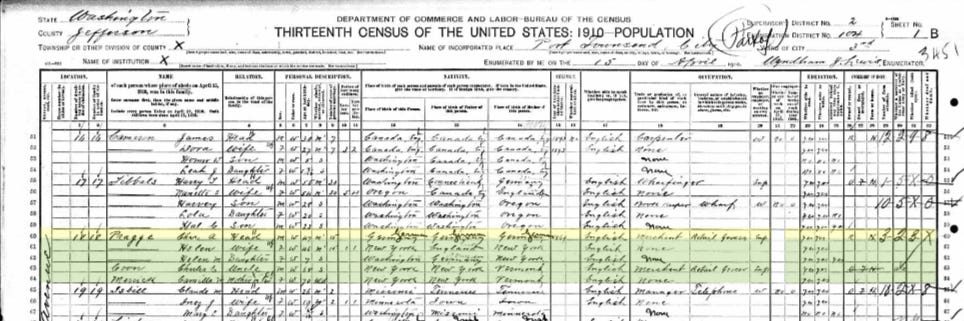
That fact didn’t mean anything to us when we first moved into the house at 1028 Tyler Street. At the time we didn’t yet understand his relationship to it. We knew the name, but only faintly, and indirectly, through references that placed him in the margins: uncle, family member, resident. The 1910 census found him in the Pragge household simply as “Uncle” and “Retired Grocer” — not as head of household or property owner, but as someone’s elderly relation lodged within someone else’s domestic arrangement. When the time came to name our bed and breakfast, we named it for the people the record then seemed to place at the center of the story: Albert C. Adams, who built the house, and the Pragges, who had left the longest trail in the local archive.
We were not wrong, exactly. But we were not yet asking the right questions.
Our perception changed when we discovered a plumbing permit requesting a city connection to bring water to the house. A line in that municipal document identifies Charles E. Coon not as an elderly uncle lodged beneath someone else’s roof but as owner. He had not simply lived here. He had owned the house.
Once his name was no longer peripheral and we started looking, we found it everywhere. In newspaper columns, city records, campaign notices, and business directories. In mentions of the Port Townsend Mercantile Company. In accounts of public office, political clubs, and civic ambition, of the the city’s water system being built and Chetzemoka Park being created. The more we learned about this man who had been called Uncle Charlie by the entire town, the stranger his near-complete absence from that town’s public memory became.
Charles Edward Coon was not obscure in his own time. He was not just a minor resident briefly attached to a prominent house. He was not merely someone’s uncle — a retired grocer who happened to occupy a spare bedroom in old age. Charles Edward Coon had fought in the Civil War. He had gone into the Treasury Department in Washington, D.C., and risen through it by competence rather than inheritance. He had served as Assistant Secretary of the Treasury and, for a time, Acting Secretary. Newspapers treated him as a man whose opinion mattered on finance, diplomacy, appointments, and the machinery of government. He crossed the Atlantic in connection with large financial transactions. His name appeared in relation to early communications technology endeavors, Republican politics, national patronage struggles, the aftermath of the Civil War, and even as a co-founder of one of the country’s first organized baseball clubs.
His career unfolded in the machinery of the postwar federal government: debt, bonds, appointments, resignations, political transition, the tension between reform and patronage. He was nominated by President Arthur to succeed John C. New as Assistant Secretary of the Treasury. During Secretary Folger’s illness and after his death, Coon acted in the department’s highest responsibilities. Newspapers speculated about whether he should become Secretary outright. Some argued that the only appointment universally acceptable would be to promote him. Others worried that the short remaining term of the administration made the office politically impossible. Then the administration changed. The Democrats came in. Secretary Manning wanted a Democrat in the role. Coon resigned.
The newspapers understood the event through the language of politics. They also understood it through the language of loss. One report noted that he had remained to help train the newcomers and keep the department steady before being asked to step aside. Another framed his resignation as a contradiction in civil-service reform.
The language of his whole career to that time was not flamboyant. It was administrative. Faithful. Efficient. Competent. Trusted. Those are not words that usually become monuments. Yet they are the words by which institutions continue.
Power had rooms. It had newspapers, hotel lobbies, reading rooms, private clubs, steamship departures, letters, appointments, rumors, and men who knew one another well enough that a name could circulate before a decision had been made. The archive shows not only a man losing office, but a system revealing itself. After leaving the Treasury, Coon made his permanent home in Manhattan’s Fifth Avenue Hotel. He appears repeatedly in documentation of that world: in the Union League, in Republican circles, in financial conversations, in interviews about England, Ireland, diplomacy, public finance, presidential appointments, and the concentration of wealth. The New York Times, Washington Post, New York Tribune, The Sun, and Boston Daily Globe all treated his opinions as newsworthy. In the summer of 1887, the Boston Globe noted on its front page that he was aboard the private steam yacht Meteor, cruising the New England coast in the company of General William Tecumseh Sherman. Charles Coon was quoted often enough to become vivid in the national imagination.
He had wit. He had judgment. He had a long frame and a dry manner.
The Sun reported on May 13, 1887, that each morning about nine o’clock he came down to the reading room of the Fifth Avenue Hotel with a bundle of daily newspapers; if his preferred chair at the far window was occupied, he waited until it was vacated, then seated himself with his long legs crossed so as to serve as a table for his papers, and read every line of the news of the day.
The following year, the January 21, 1888, issue of The Evening World found him in the same room and asked him about breach-of-promise suits. He drew himself up to his full height — six feet three, the paper noted — and answered with the timing of a man accustomed to being watched. He didn’t believe in such suits, he said; he had never taken advantage of one. As for himself, he said, he had left a young lady behind when he went off to war, having exchanged sweet promises, and had received in return only packages of needles and thread — for buttons fall off, you know, and all bachelors know how to sew.
The Jefferson County Historical Society’s history of the region, published in 1966, remembers him as “cultured, suave, infused of religion, tinted with literary ambition, bearing the impress of frontier life with social graces.”
And then he came to Port Townsend.
He was fifty-five years old. At an age when most men would have been consolidating the life they’d already made, Coon began another one.
He came west because of family. His niece Helen had married Charles A. Pragge, and the Pragges were already part of the Pacific Northwest world. His widowed sister, Camilla, came too. The family structure matters because Coon’s public name and private identity seem always to have met in the word uncle. And while “Uncle Charlie” may have started as a domestic nickname, it became a civic one. In New York, after Camilla’s husband died, he had taken in her children and helped raise them. The name traveled with him to Port Townsend and expanded, attaching itself to his politics, his presence, his manner, his public life. Near the end of one of his tenures as Port Townsend’s mayor, when someone asked what people should call him — Uncle Charlie? Colonel Coon? — he said he had always been partial to Charlie (Seattle Star, January 30, 1905).
There is modesty in that. There is also a puzzle.
How does a man who received every single vote cast in his final mayoral election become almost unmarked in the city he helped shape? How does a man of national office, local devotion, and civic consequence disappear so thoroughly that the file on him in a historical society can be thin, while his name remains scattered everywhere once one knows where to look?
This is not hidden history in the ordinary sense. Far from hidden, Charles Coon was almost extravagantly public. The newspapers knew him. Political men knew him. Treasury men knew him. Port Townsend knew him. It seemed that anywhere he went he moved almost effortlessly into leadership. He was elected Port Townsend’s mayor four times. In 1905, he was elected Lieutenant Governor of the state of Washington. The June 11, 1905, Spokesman-Review described as “the most popular man who had anything to do with the legislature” and showed how during his attendance as the head of Washington’s delegation to the Portland fair, “legislators looked upon [him] as a leader and fraternized with him to the exclusion of the [Portland] governor.” He was prominent enough that his comings, goings, opinions, appointments, business ties, and political possibilities were printed, repeated, clipped, and circulated.
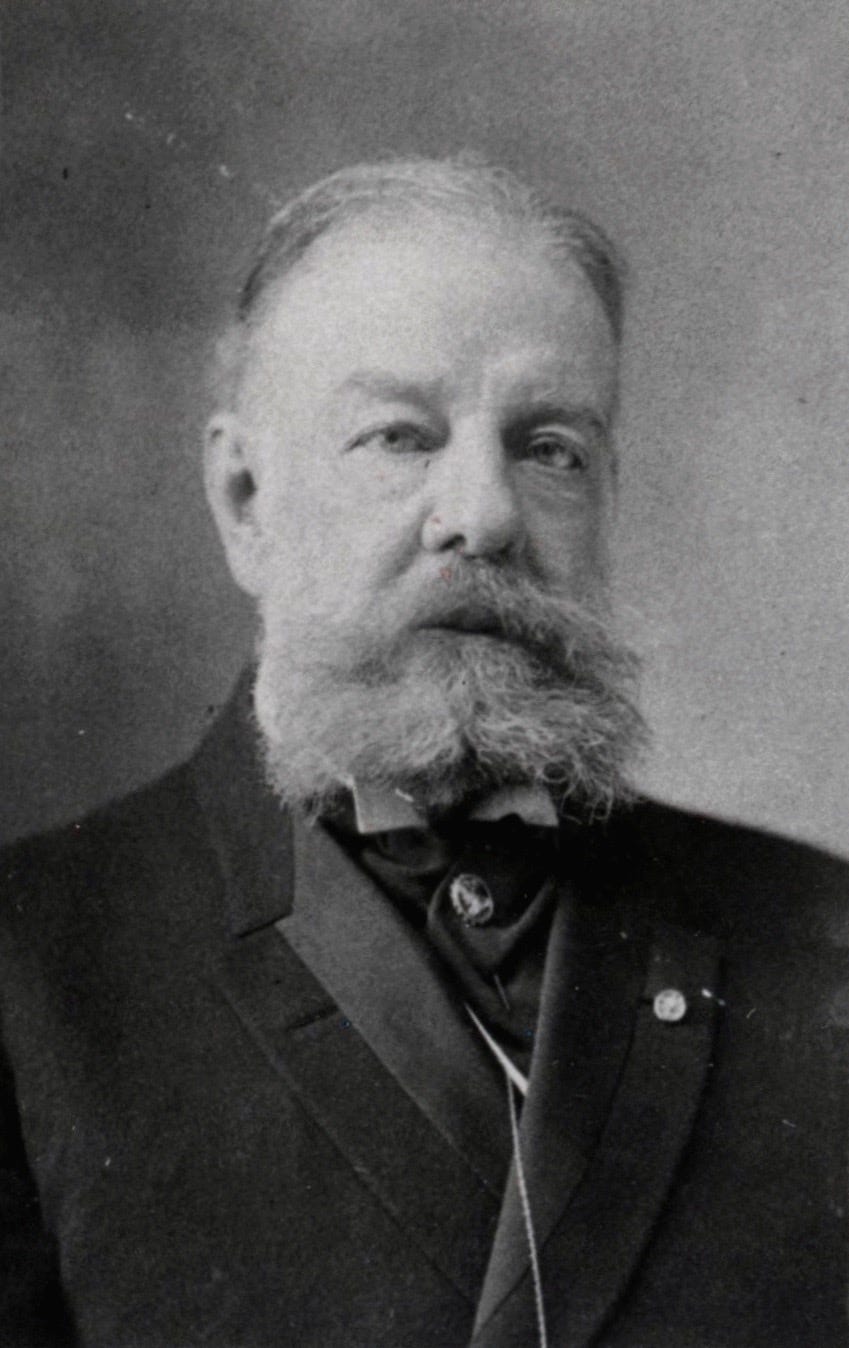
His public life didn’t lack documentation; it lacked permanence — and that distinction matters.
Some people leave monuments to themselves. Others leave systems behind. Coon seems to have belonged to the second class.
He did not arrive in Port Townsend as a young speculator trying to make his name. If anything, he arrived already having too much of a name: soldier, Treasury man, Republican, administrator, bachelor, uncle, financier, officeholder, commentator, survivor of Washington, D.C., politics. He could have rested on the dignity of prior offices. Instead he entered the life of the town, helping to supply it, to govern it, and to sell the idea of it to itself and the nation.
Coon was a man carried by systems of circulation: newspapers, steamships, telegraphs, bonds, stores, elections, family networks, civic committees. His public identity moved through channels. It crossed the Atlantic. It crossed the continent. It moved from Washington, D.C., to New York to Chicago to Port Townsend — and from Port Townsend into Washington’s state politics.
Then, somehow, the channels closed.
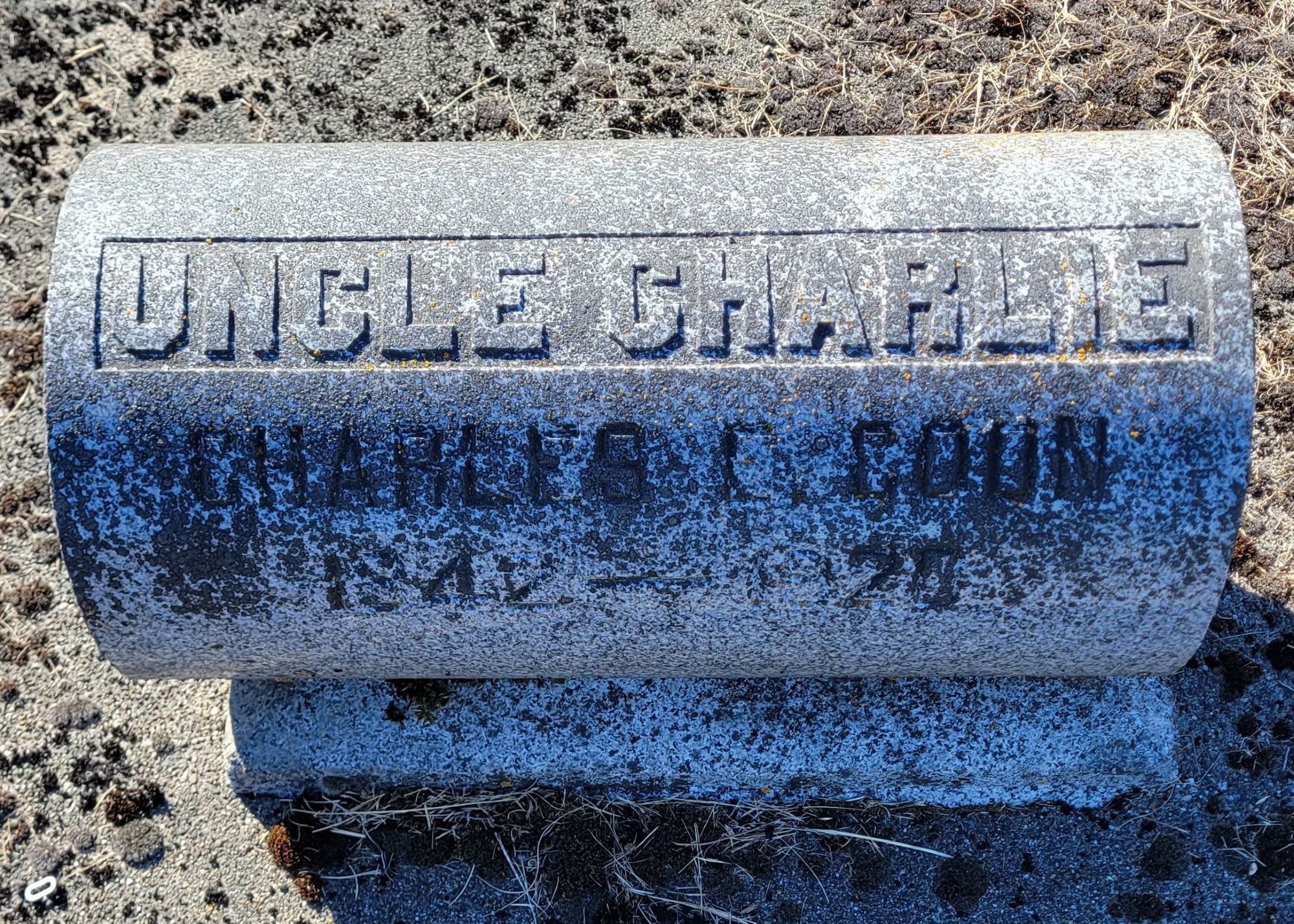
Not all at once. History rarely disappears all at once. It thins and becomes assumed. It becomes local knowledge. It becomes “everybody knew him.” It becomes the one of dozens of city leaders in a caricature composite whose face needs no title. It becomes a bottle found by someone else and documented in their blog post, a city directory listing, a line in a newspaper index, a permit application for a city water connection, a business listing. It becomes a nickname on a gravestone.
This is one of the strange cruelties of local history: the more familiar someone is in life, the less carefully he may be preserved for strangers later. Everyone knew Uncle Charlie. And then, eventually, no one did. Or almost no one.
The question is not whether Port Townsend failed him. That is too simple, and probably unfair. Towns forget for many reasons. Buildings change hands. Families die or move away. Businesses close. Newspaper stories of the day disappear into microfilm. Civic memory favors some stories and loses others. A great man who did not insist on self-memorialization may leave less trace than a man of smaller consequence but greater appetite for commemoration.
Still, the loss is striking.
There is no major local monument to Charles Edward Coon. No common civic invocation. No ordinary tourist itinerary pauses over him. The house he owned is better known by other names and off the map of walking tours and their local color stories. The park, the city water system, the institutions, the civic assumptions he supported became part of the city’s functioning and therefore part of what later generations stopped seeing.
The streets, in their way, tell part of the story. In 1911, while Coon was still part of the city’s public life, Port Townsend renamed what had simply been First and Second Streets for Roosevelt and Taft — still writing the architecture of political memory into the grid, still honoring the national men. Blaine — a contemporary and colleague from Coon’s days in federal service — already stood at one edge of the block where Coon lived. Roosevelt would soon stand at the other. The city kept finding national names for its geography, but it never found a place for his.
That may be the deeper pattern: The labor that makes a place livable often disappears into the livability itself. City water flows into homes. Goods arrive. Parks open. Meetings are held. Streets are improved. A town becomes more itself. Then the names fall away.
The Port Townsend Mercantile Company places him in the city not as a distant political figure, but as part of its daily economy. The business was family-linked: Charles Coon as president, Helen L. Pragge as secretary, Charles A. Pragge as manager. City directories place the company centrally downtown at 311–313 Water Street. The surviving notices are wonderfully ordinary. New goods every day. Nearly every steamer, one item reported, brought groceries, flour, and feed for the Mercantile — goods arriving by water to be sold by weight and measure to a town still learning what it would become. A town does not live by civic speeches alone. It lives by the practical intelligence of getting fresh stock onto shelves in a place surrounded by water.
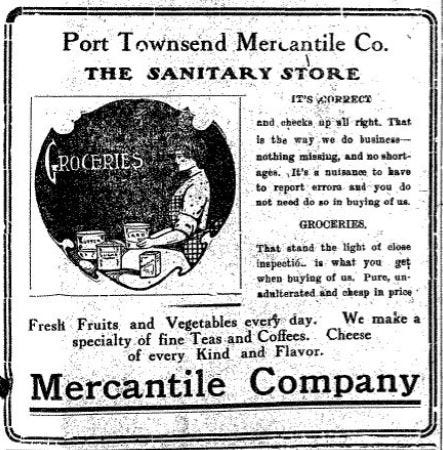
The Port Townsend Mercantile Company is long since gone. The later Water Street site has not become a shrine to Coon. It has done something more characteristic of Port Townsend and any city that retains so much of its historic architecture: it has kept changing use — surviving by remaining useful. That may also be one of the truest things one can say about Charles Coon.
The record suggests a man less interested in statuary than in conditions: water, commerce, parks, governance, civic morale, the machinery by which a town continues to believe in itself after the first expected future has failed to arrive. Port Townsend had expected greatness. The railroads had not come as promised. The boom had faltered. The city remained, but with a kind of wounded grandeur — its ambitions still visible in its buildings, streets, harbor, ornate houses, and in its confidence that beauty and consequence were not the same thing as size. Coon seems to have understood that kind of persistence. He had practiced it.
And yet Uncle Charlie is not entirely gone. He remains in fragments, which are sometimes how the past tells the truth. A formal biography might overstate coherence. A monument might flatten him. A plaque might make him smaller than he was. But the scattered record, for all its difficulty, preserves something stranger and more alive: a man visible in motion. Here he is in Washington, D.C., rising through the Treasury. Here he is in New York, a fixture reading newspapers in the Fifth Avenue Hotel. Here he is crossing the Atlantic to settle the debts of the Civil War. Here he is connected to financial schemes and early communications ventures. Here he is in Port Townsend, president of a mercantile company. Here he is elected mayor once, and again, and again. Here he is chosen by every single voter who cast a mayoral ballot. Here he is Lieutenant Governor, the official Washingtonians have to thank for Arbor Day. Here he is uncle. Here he is nowhere obvious. Here he is everywhere once one begins looking.
That is the form of him now. Not statue, house name, or polished civic legend. A constellation.
To write about Charles Edward Coon, then, is not only to reconstruct a life. It is to study the systems that made a life visible and the systems that allowed it to vanish. It is to ask what kinds of public labor survive as memory, and what kinds survive only as conditions. It is to ask how a city can retain a man’s works while losing the habit of saying his name.
When faced with a figure of this scale, it’s tempting to begin with the largest office and move outward from there. Acting Secretary of the Treasury. Lieutenant Governor. Mayor. Civil War veteran. Transatlantic financier. That would not be wrong. But it would not explain Uncle Charlie, the name that remained where the titles did not.
The people who buried him understood something better than later memory did: Offices are temporary. Elections end. Federal appointments vanish into ledgers. Political factions reorganize. The newspaper that prints a man’s name on Monday wraps fish by Friday. But the name by which a family calls him, the name by which a town recognizes his manner, the name carved into stone because it had become the truest public shorthand for affection — that is another kind of record. It does not tell us everything. It tells us what could not be replaced.
Charles Edward Coon died in early January of 1920, two months shy of his seventy-eighth birthday. He had lived long enough to have crossed several Americas: the Civil War republic, the federalizing postwar state, the Gilded Age of finance and patronage, the booster city of the Pacific Northwest, the early twentieth-century town still trying to understand what it had become. He is buried in a modest grave at Port Townsend’s Laurel Grove Cemetery.
That modesty now seems less like absence than instruction.
Not every life announces itself in stone. Not every form of importance becomes visible to posterity. Some men build the things that other people inhabit. Some become so familiar that no one thinks to explain them. Some carry public authority and private tenderness in the same body. Some spend a lifetime in systems of power and ask, finally, to be remembered as uncle.
The work now is not to rescue Charles Coon from obscurity by making him grander than he was. He was already grand enough. The work is to notice the scale of what disappeared, and to follow the fragments without forcing them into certainty too soon.
Because Port Townsend did not only lose a mayor. It lost Uncle Charlie.
Blaine and Roosevelt remain permanently memorialized in the city’s geography, bookending the block where Charles Edward Coon lived. But Coon survives mostly in fragments. The only stone monument to him does not remember him as mayor, lieutenant governor, Treasury official, soldier, financier, or president of anything. It remembers him simply, as Uncle Charlie.
Selected Sources: 1910 United States Federal Census; Port Townsend Daily Leader; The New York World; The Evening Star; Jefferson County Historical Society Research Center collections.
Zhenya Lavy writes The Turret Journal from within the Adams Pragge House, an 1889 Victorian in Port Townsend, Washington, where she and her husband serve as its stewards.
The Adams Pragge House is a three-suite bed and breakfast in Port Townsend, Washington. Learn more at adamspraggehouse.com.
→ https://adamspraggehouse.com
Related essays from The Turret Journal: